Clinical leadership
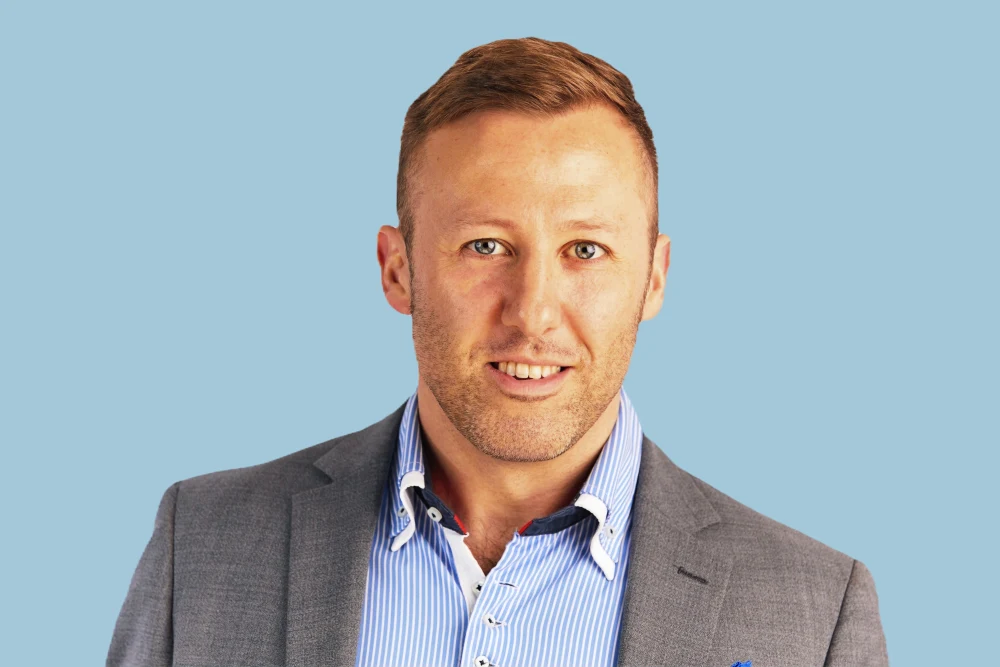
Dr James Ayres
Co-Founder / CEO
A UK-trained GP based in Canberra, with experience across general practice, men’s health and chronic disease care.
One connected platform for the whole practice — booking, the patient chart, prescribing, dispensing, payments, intake, documents and automation. Australian-hosted, private by default, and configured by your own team — not a developer.
Built by clinicians, for their own clinic.
01·The problem
Most practices don’t have one system. They have a stack — and the gaps between the parts are where the time, the money and the mistakes go.
01
Booking in one app, the record in another, dispensing, payments, letters and reminders all bolted on — none of it talking to each other.
02
The same patient typed into four systems. Lists that are out of date the moment you look away. The front desk always a step behind.
03
Every change is a vendor request or a developer ticket. You wait weeks to alter a form, a price, or a reminder you should own.
02·One platform
Every part of a practice resolves to a small set of composable primitives. PatientOS is built from them — so booking flows into the chart, the chart into prescribing, prescribing into dispensing, payment and the document, with nothing re-keyed in between.
It’s one system, not an integration. Each capability is configuration of a maintained product — not net-new code, and not another subscription to reconcile.
03·What it does
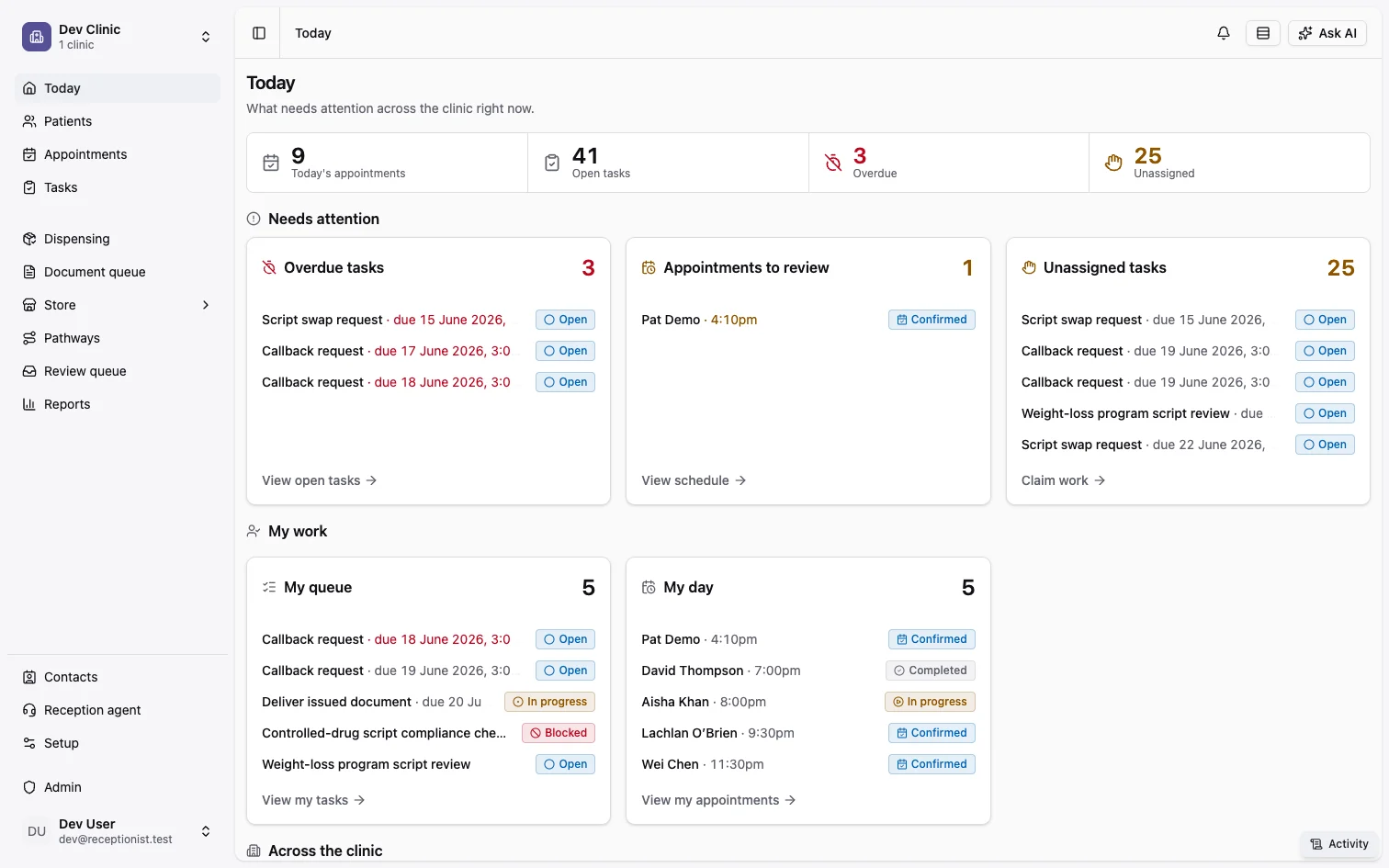
Built and working in private alpha. The screens below are the product as it stands today — ahead of our first clinics going live.
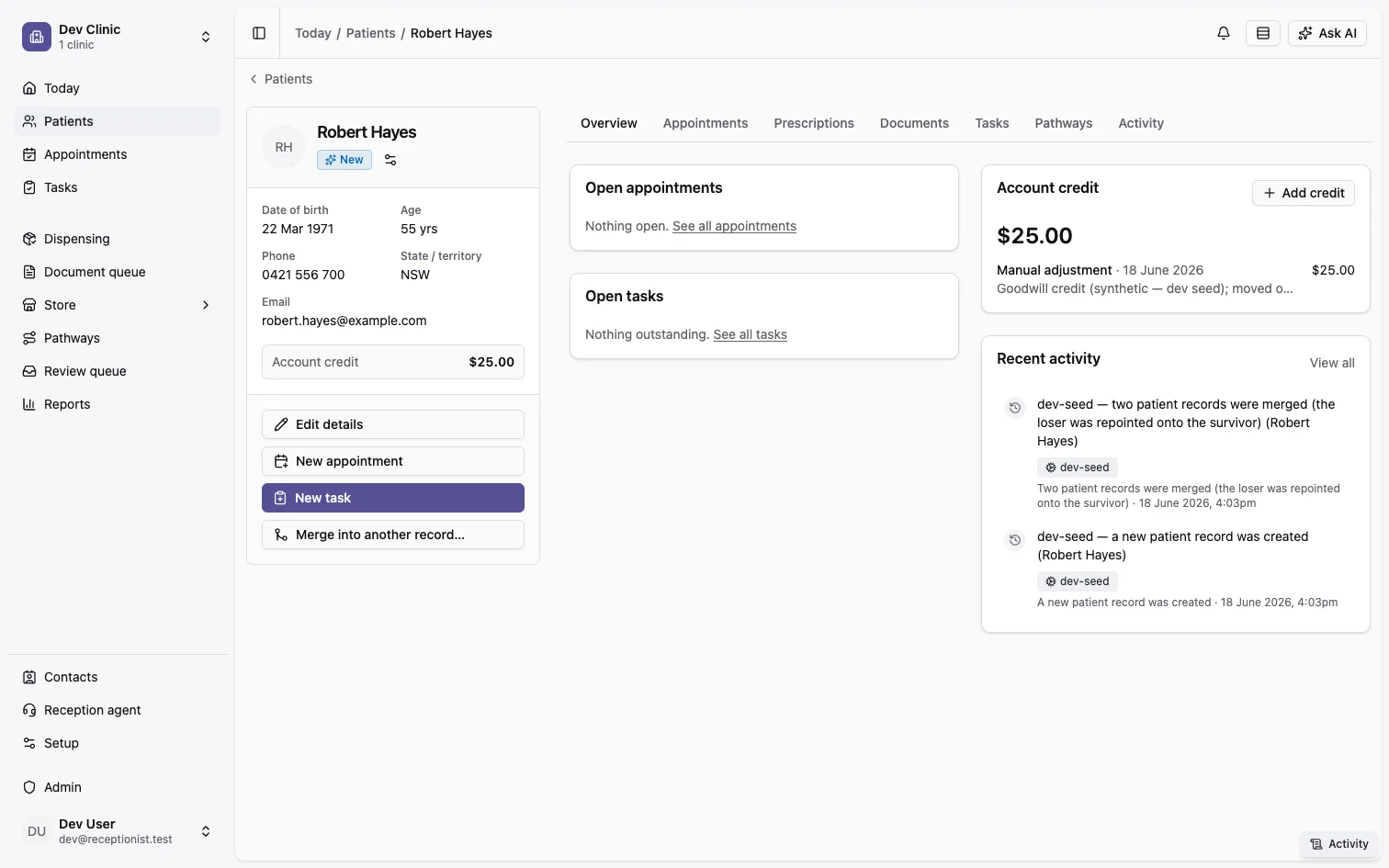
The patient chart
Everything about a patient — appointments, scripts, documents, tasks — in one master-detail view.
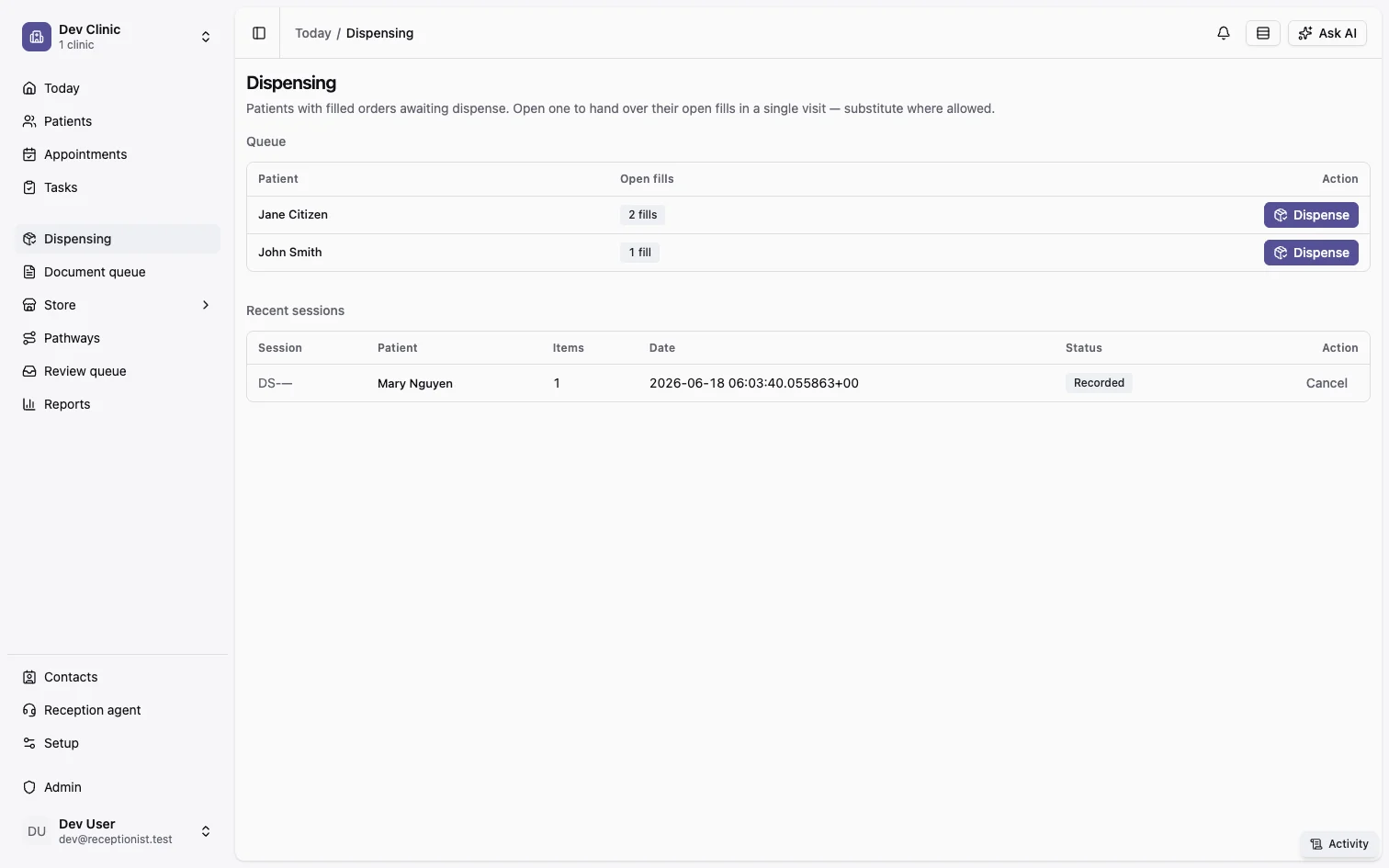
Dispensing & fulfilment
Scripts become fills become dispenses — pickup and post, paid at the gate, from one queue.
Book a practitioner × appointment type into a confirmed slot against live availability. Leave, capacity and recurring hours are respected automatically — no double-booking while a doctor is away.
Branching question sets — pre-consult, eligibility, consent — whose answers bind straight onto the patient or appointment. No re-typing what the patient already told you.
The whole medication spine in one flow, with card capture authorised at the gate — pre-auth, 3DS and capture, gateway-agnostic. Pickup or post, handled from one queue.
Design a letterhead, drop in merge fields, and referrals, consent forms, clinical letters and invoices come out as finished, verifiable PDFs — generated, never hand-typed.
A staff point-of-sale with live catalogue, barcode scan and customer-attach at checkout — walk-ins and pickups handled right alongside online dispensing.
Reminders, no-show reschedules, repeat-due chases, limit tracking — clinic policy compiled to durable triggers and timers that fire without anyone remembering to.
04·Configure it yourself, safely
Most systems make you log a ticket and wait. PatientOS hands the whole system to your staff: appointment types, intake forms, care pathways, pricing, letterheads, roles — even which modules are switched on — all edited in-app by your own admins.
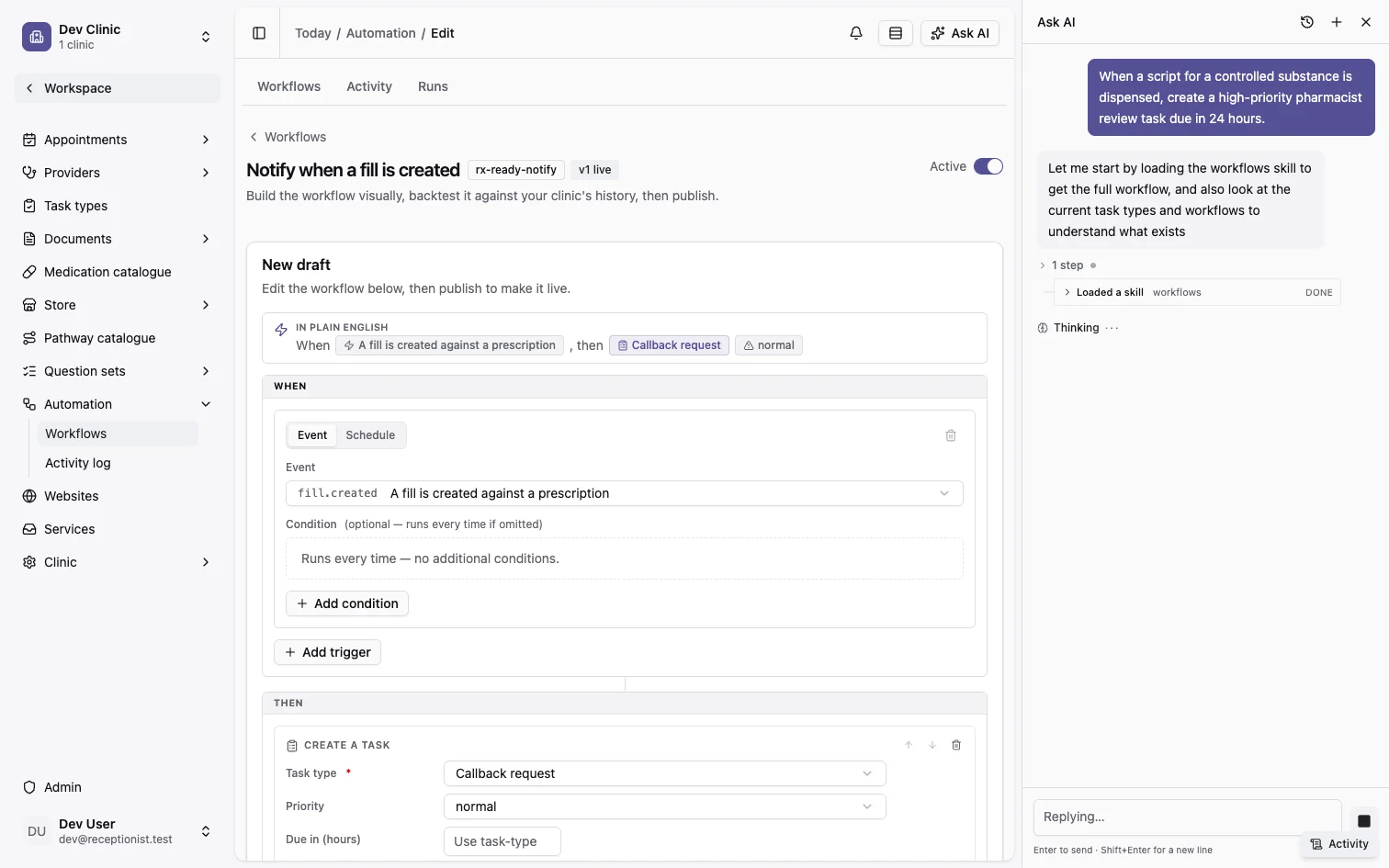
“When a controlled-substance script is dispensed, raise a high-priority pharmacist review due in 24 hours.” — and the assistant drafts the live workflow for you.
05·Australian & private
PatientOS runs on Australian infrastructure, and patient data at rest stays in the country — handled under the Privacy Act 1988 and the Australian Privacy Principles. Privacy is the default, not an add-on, and not a setting you have to remember to switch on.
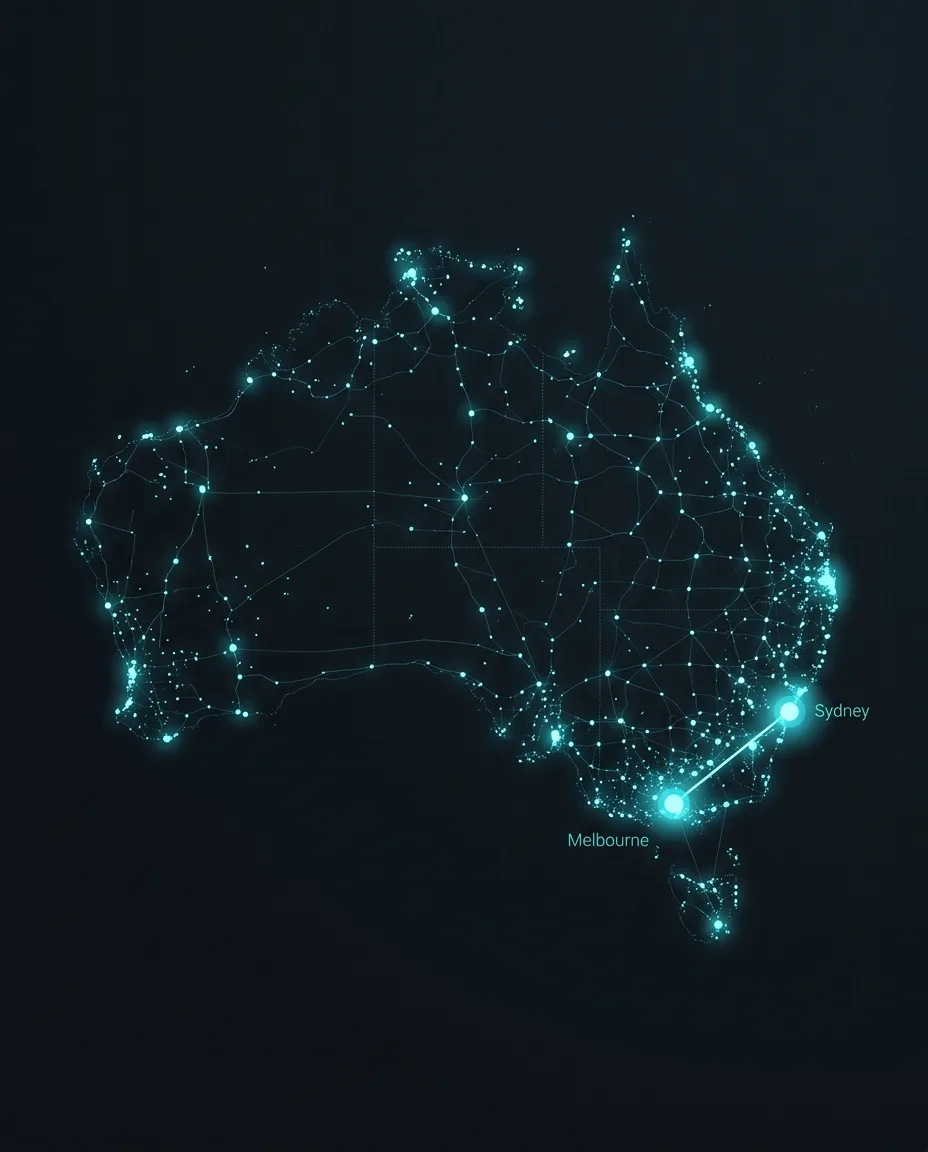
Data residency, by default
Sydney · Australia · APP 8
06·Who’s building it
PatientOS is built on PocketDoc’s own clinic by its two founders — a UK-trained GP and a senior engineer. Clinical judgement and the build, in the same room.
Co-Founder / CEO
A UK-trained GP based in Canberra, with experience across general practice, men’s health and chronic disease care.
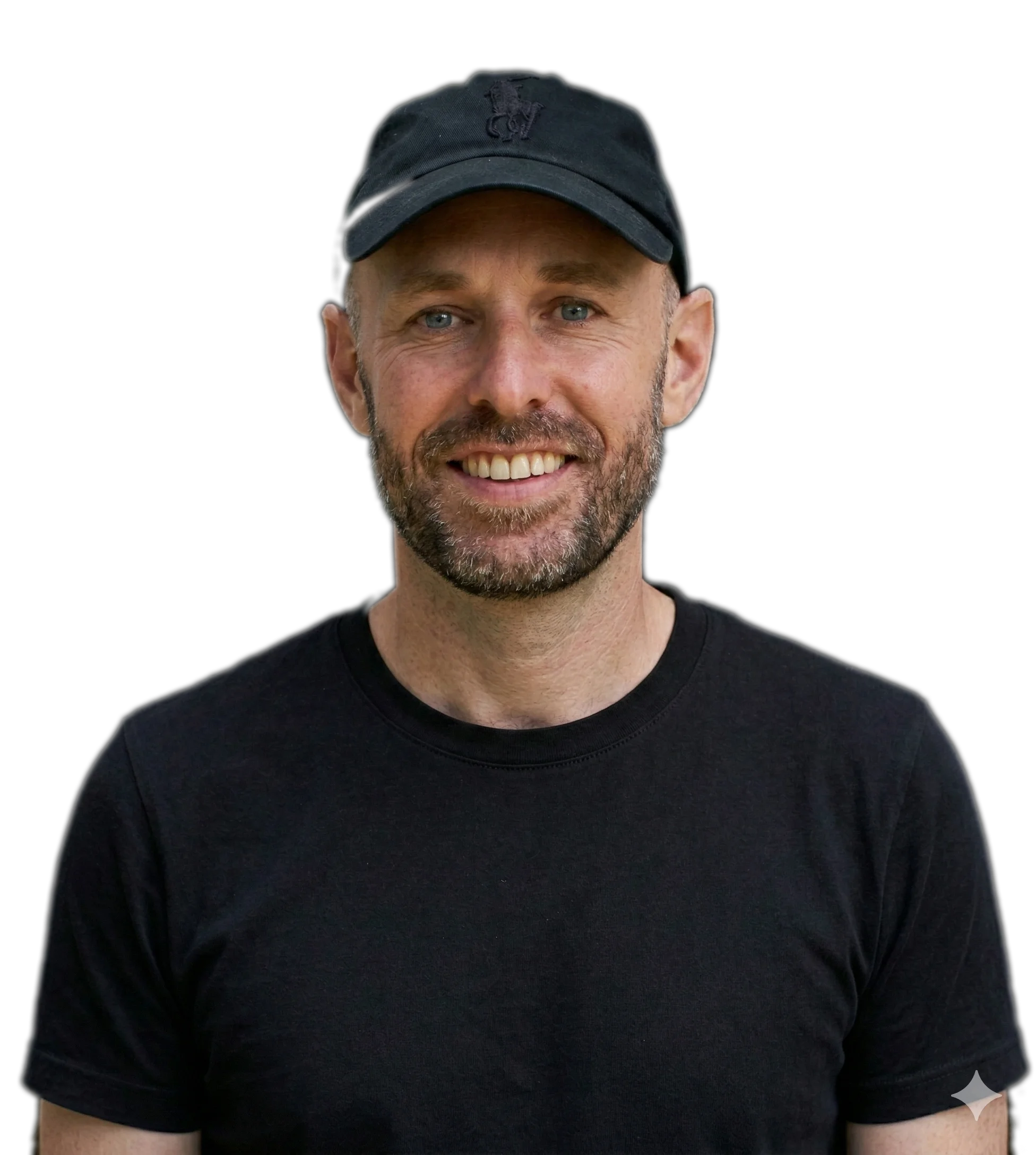
Co-Founder & engineer
Designs and builds PatientOS himself — decades spent helping teams make good technology decisions, now doing the same with AI, shaped by how a clinic actually runs day to day.
“PatientOS isn’t briefed out — it’s software I design and build myself. That’s why it holds together as one system, instead of a pile of features that don’t quite meet.”
— Tim O’Connell, Co-Founder & engineer
07·On the roadmap
PatientOS is under active development. These are the angles we’re planning to grow into — the national rails, connected prescribing, and more of the busywork handled for you.
Claim, report and verify through PRODA — the immunisation register and My Health Record — without leaving the chart.
Send pathology and imaging requests electronically and have results land back on the patient’s timeline, not a paper tray.
eScripts, the active script list and real-time prescription monitoring, with interaction checking built into the prescribe step.
Describe the page you want and it lays out a branded, bookable site wired straight into your live clinic. No agency, no separate CMS.
Ask what’s on today, pull a patient’s history, draft a task — answered out loud, with anything irreversible left for you to confirm.
A complete, documented API over your whole clinic, so you — or anyone you choose — can build integrations on top of PatientOS.
08·Request access
We’re onboarding Australian clinics gradually and hands-on. Tell us a little about your practice and we’ll be in touch when a spot opens up.